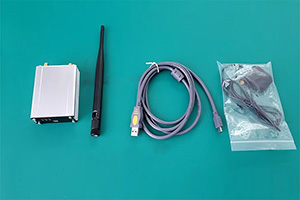
|
What is ADSB-SIM600 mainly used for?
ADSB-SIM600 is mainly designed for laboratory and development environments where simulated ADS-B targets are required.
Typical applications include:
· ADS-B receiver testing and verification
· ADS-B receiver decoding performance testing
· Multi-target stress testing
· ADS-B surveillance system development
· Flight tracking and display software testing
· Laboratory demonstrations
· Research and development
· Training and educational environments
· ADS-B system integration and validation
By generating simulated aircraft targets, ADSB-SIM600 allows users to test ADS-B equipment and software without relying on real aircraft traffic.
Can ADSB-SIM600 replace real aircraft traffic for testing?
For laboratory testing and controlled system verification, ADSB-SIM600 can provide simulated ADS-B targets without depending on real aircraft traffic.
This offers several advantages:
· Testing can be performed at any time
· The number of targets can be controlled
· Test conditions can be repeated
· Multi-target scenarios can be created
· Stress-testing conditions can be generated
However, simulated testing and real-world operational testing serve different purposes. ADSB-SIM600 is primarily designed to provide a controlled environment for development, verification and demonstration.
Does ADSB-SIM600 transmit real RF signals?
Yes.
ADSB-SIM600 generates and transmits real 1090 MHz ADS-B RF signals that can be received by compatible ADS-B receivers.
Therefore, the product should be used carefully to avoid unintended reception by nearby ADS-B receiving equipment.
For laboratory testing, a controlled connection between the simulator and the receiver under test is generally preferable.
Can ADSB-SIM600 be used outdoors?
Outdoor use is generally not recommended.
Because ADSB-SIM600 transmits standard ADS-B signals that can potentially be received by ADS-B receivers, uncontrolled outdoor transmission may affect nearby receiving equipment.
The recommended application environment is a controlled laboratory or indoor testing environment.
If over-the-air testing is necessary, the transmission should be carefully controlled and conducted in accordance with applicable local requirements and regulations. The product documentation specifically recommends minimizing unintended signal radiation and transmission time.
Who is ADSB-SIM600 suitable for?
ADSB-SIM600 is suitable for organizations and professionals involved in ADS-B technology development, testing and system integration.
Typical users include:
· ADS-B receiver manufacturers
· Aviation system integrators
· Research and development departments
· Universities and research institutions
· Aviation laboratories
· Surveillance system developers
· Flight tracking software developers
· Aviation training organizations
It is particularly useful when a controlled and repeatable ADS-B signal environment is required.
What is the difference between ADSB-SIM600 and an ADS-B transmitter?
Although both ADSB-SIM600 and an ADS-B transmitter can transmit ADS-B signals, they are designed for different purposes.
An ADS-B transmitter is normally installed on an aircraft or other platform to transmit its actual identification, position, altitude, velocity, and other surveillance information as part of an operational ADS-B system.
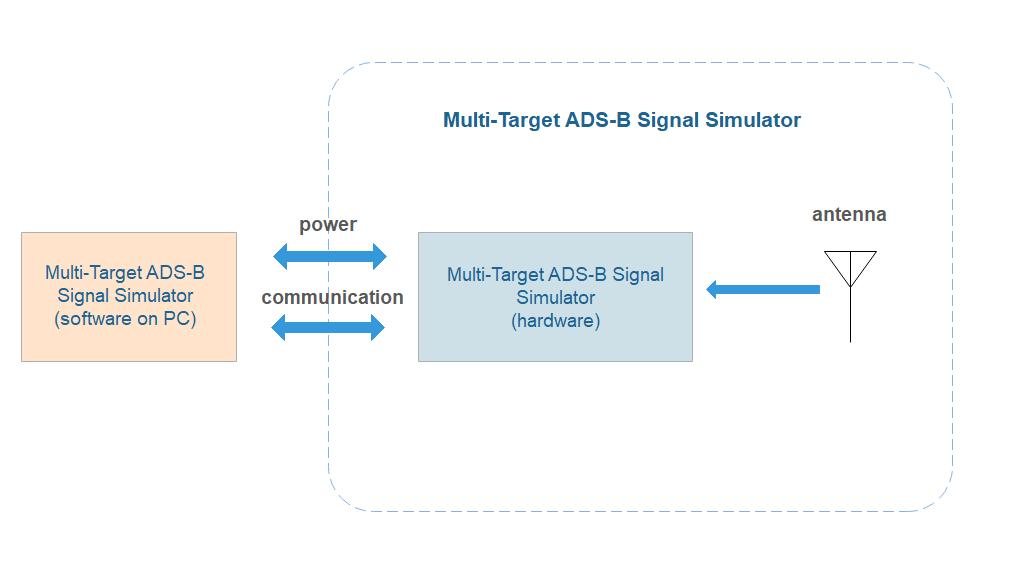
ADSB-SIM600 is designed for testing, development, demonstration, and system verification. Instead of transmitting data from a real aircraft, it generates simulated ADS-B DF17 messages representing multiple aircraft targets.
ADSB-SIM600 can simulate up to 600 aircraft targets simultaneously, making it suitable for applications such as ADS-B receiver testing, multi-target processing tests, surveillance system verification, and flight tracking software testing.
In simple terms:
· ADS-B Transmitter: Transmits ADS-B information from an actual aircraft or operational platform.
· ADSB-SIM600: Generates simulated ADS-B signals representing multiple virtual aircraft targets for testing and development.
|
 Multi-Target ADS-B Signal Simulator ADSB-SIM600 User Manual